SpaceResearch desk · Astronomy
Webb confirms a star swallowed its companion after just seven orbits
Astronomers confirmed a stellar merger in the outskirts of Andromeda, where a smaller star spiraled into a puffy supergiant and the pair brightened within a week — faster than one co-author expected.
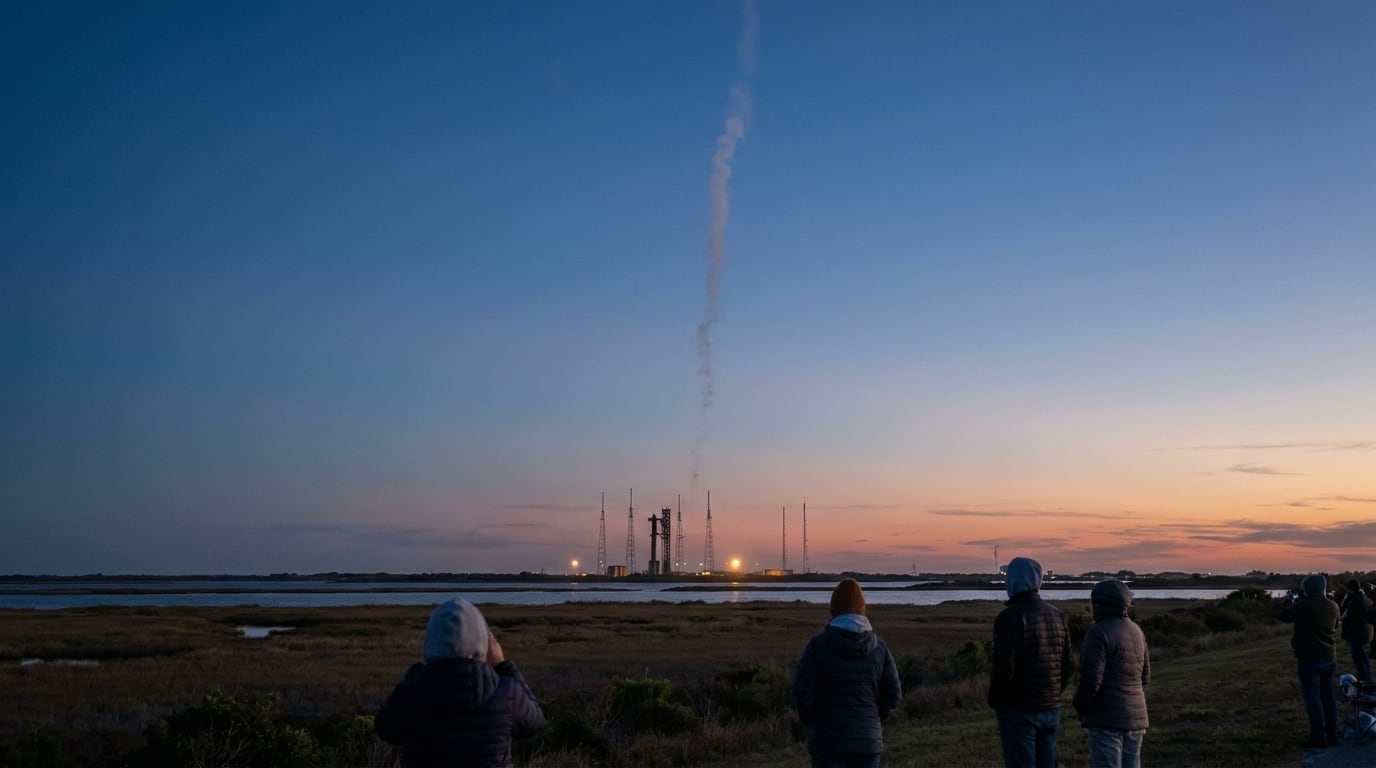
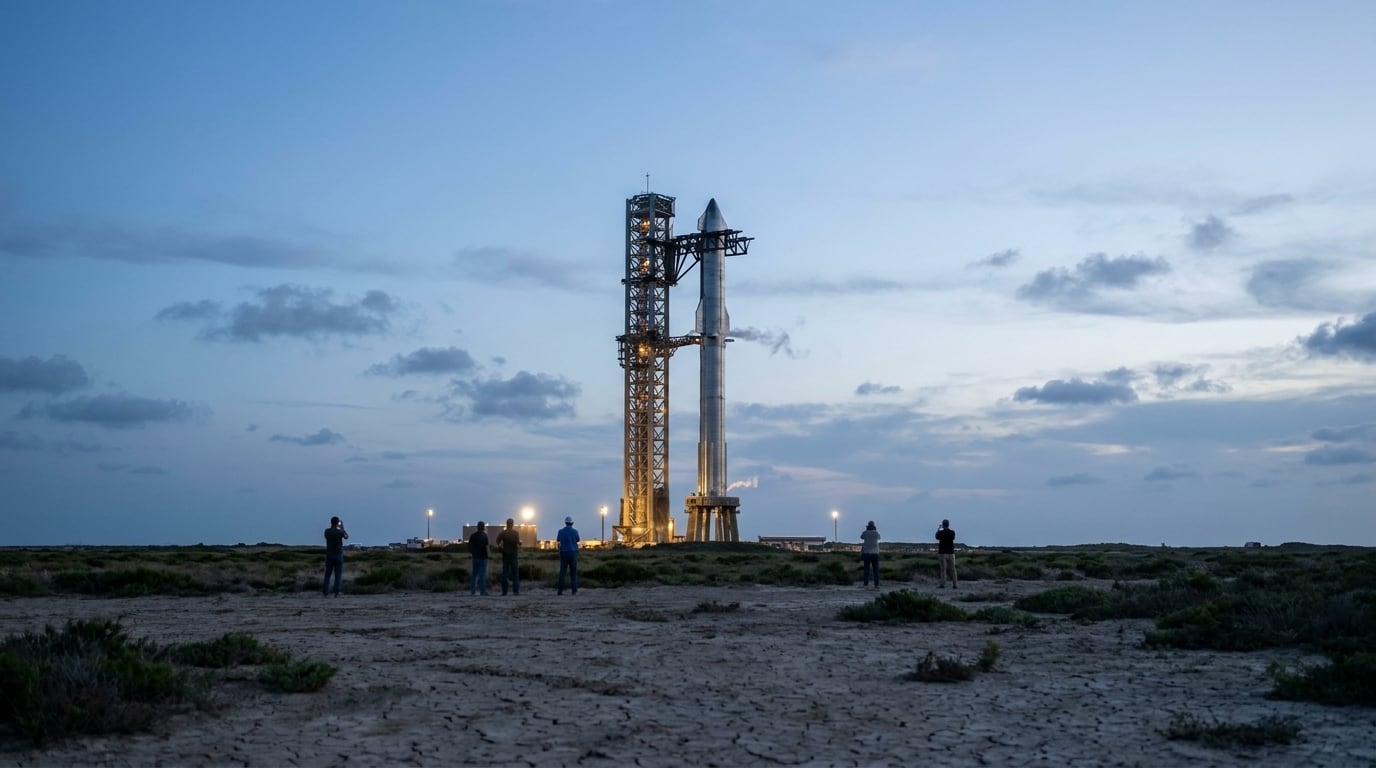
 AI illustration
Why it matters
Stellar mergers are hard to catch because they are hard to predict, so most of what astronomers know about them comes from the aftermath. This event was seen early and followed across ultraviolet, visible, near-infrared and mid-infrared light, giving researchers a rare chance to test models of common envelope evolution — the phase in which one star engulfs another and the pair's orbital energy is lost to drag. The result matters beyond one star: the same process shapes how binary systems end up, whether they merge or survive as a tight pair.
AnalysisA star slightly less massive than the Sun spiraled into a puffy supergiant at the outskirts of the Andromeda galaxy and merged with it, a team of researchers reports. NASA's James Webb Space Telescope observations in December 2025 provided the final evidence used to confirm the merger. The surviving single star was nicknamed Bao and described as potentially rejuvenated.
AnalysisThe discovery was NASA-funded and relied on quick-turn Webb observations cross-referenced with data from space- and ground-based telescopes. Viraj Karambelkar, a NASA Hubble Fellow at Columbia University in New York, is first author of the new paper in Nature.
AnalysisBao first caught the team's attention in February 2023, and the researchers kept monitoring the system, which erupted in 2025. Karambelkar said stellar mergers are very difficult to observe in real time because they are hard to predict.
Seven orbits, then a merger
AnalysisBefore merging, the two stars orbited as a binary pair. After the smaller star contacted the giant's surface, unification happened after only seven orbits, about seven years. Other known binary mergers, featuring two smaller stars, occurred after thousands of orbits.
AnalysisThe process is a common envelope evolution: the primary star engulfed the smaller star, and the companion spiraled through the shared envelope, losing orbital energy to drag. According to the team's modeling, Little Bao was dragged into Big Bao's core rather than fleeing — an inference from simulations, not a direct observation, and one that rests on the same modeling that produced the companion's estimated mass.
AnalysisBefore the eruption, the primary star — nicknamed Big Bao — was seven times as massive as the Sun, 350 times the Sun's radius and 18,000 times as bright. Co-author Karel Temmink, a Ph.D. student at Radboud University in Nijmegen, Netherlands, led the simulations and described the primary as an absolute beast that completely outshone its companion in the data.
Faster than expected
AnalysisCo-author Nadia Blagorodnova, an associate professor at the University of Barcelona, said she expected an outburst from such an extended star to take years, but brightness peaked within a week. Co-author Kishalay De, an assistant professor at Columbia University, described the slow brightening in Bao's data as the companion interacting with the primary star's outer surface.
AnalysisWebb observed Bao only 47 days after the eruption peaked, the earliest ever follow-up of such an event. The team matched a model to Webb's mid-infrared observations, which detailed dust shed by the more massive primary star over centuries.
AnalysisWebb data allowed the team to measure how much mass was ejected and how efficient common envelope evolution was. The team also drew on ultraviolet, visible and near-infrared observations from several telescopes.
What the paper does not settle
AnalysisA merger was not the only possible outcome. In other systems both stars survive, shedding mass but remaining independent in tight orbits, so Bao is one case rather than a template for every binary.
AnalysisThe mass of the demolished companion is a modeling estimate, not a direct measurement: Little Bao was likely about 0.7 solar masses, with a slightly smaller radius and fainter than the Sun.
AnalysisThe paper appears in Nature; the December 2025 Webb observations were the final evidence used to confirm the merger.
Timeline
Bao first caught the team's attention.
Team noticed something unusual and continued monitoring the system.
The system erupted; team published its first paper right before the eruption.
Webb observations provided the final evidence confirming the merger.
New paper in Nature published (per NASA article).
Sources
Written with AI assistance from the sources listed above. Its facts were checked against those sources and the article was proofread before publication. How we work