Artificial intelligenceAnthropic
Anthropic goes public: what the filing reveals about the cost of building frontier AI
The Claude maker listed on Nasdaq on 19 November, opening at $111.50, after raising a record $81.3 billion. For anyone who builds with AI, the interesting part is not the share price but the numbers behind it: $895 billion in computing commitments and revenue growing faster than any software company before it.
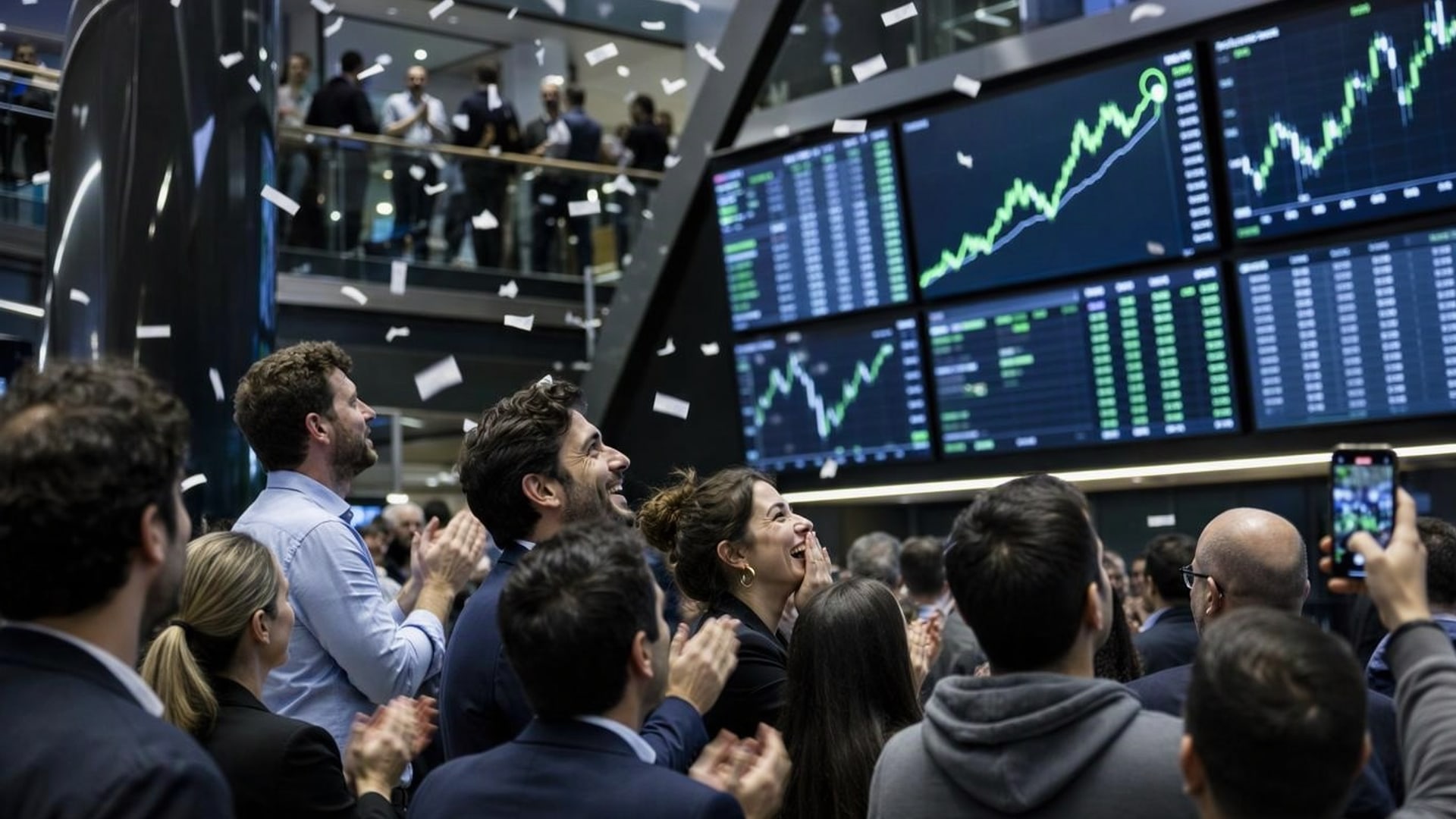 AI illustration
Why it matters
For the first time one of the leading AI labs has to publish audited numbers every quarter. That gives developers, customers and competitors a view of what frontier models really cost to train and run, and of how dependent the labs are on a few cloud and chip suppliers.
Update 19 November, 20:30 CET: Anthropic's shares have now traded. The first trade on Nasdaq came at about 11:48 a.m. New York time (17:48 CET) at $111.50, 34% above the $83 offer price, which put the fully diluted value at roughly $2 trillion. The share then gave back part of the gain: it reached $114.99 at its highest and fell to about $94; at 20:30 CET it was at $96.63, still 16% above the offer price.
Since Thursday afternoon, one of the companies at the front of AI development answers to public shareholders. Anthropic priced its initial public offering at $83 a share on Wednesday, above its marketed range, and raised $81.3 billion. The shares trade on Nasdaq under the ticker ANT. At that price the company is valued at around $1.5 trillion.
Capital Edit has the investor's view of the listing. Here we look at what the prospectus says about the technology business itself.
Revenue: from $41 million to $17 billion a quarter
Anthropic's revenue was $41 million in 2023, the year the first Claude model was released. It was $386 million in 2024 and $4.59 billion in 2025. In 2026 the curve steepened: $4.73 billion in the first quarter, $11.56 billion in the second and $17.0 billion in the third. Coding tools and enterprise use of the models through the API and the big cloud platforms account for most of it.
The company made an operating profit of $974 million in the second quarter and an operating loss of $567 million in the third, as spending on computing rose again. The headline net loss — $104.0 billion for nine months — is mostly an accounting effect: $94.3 billion comes from revaluing convertible instruments that turn into ordinary shares at the listing.
Compute: the $895 billion line
The number that says most about the industry is in the commitments table. Anthropic has agreed to purchase $895.4 billion of computing capacity over the coming years: at least $114.5 billion from Google, $110.0 billion from Amazon and $44.9 billion from Microsoft, with the rest spread over other suppliers. Each of those companies is at once supplier, shareholder and competitor. Google's stake is capped at 14.99%.
Those contracts are the reason the company needed public markets. They also tie its fate to the chip supply chain at an awkward moment: Nvidia, whose processors most of that capacity is built on, lost its founder and chief executive last week, and new US rules on where advanced chips may be installed take effect this week.
What changes for people who build on Claude
- Transparency. Quarterly reports will show growth, margins and the split between products. Pricing decisions for the API will be easier to read in that light.
- Pressure. Public investors will ask when computing costs fall as a share of revenue. That can cut both ways for prices and rate limits.
- Governance. Anthropic remains a public benefit corporation, and a trust with a mandate tied to its safety mission keeps the right to choose part of the board. The founders keep a majority of the votes. Lexendia explains how that works.
- Regulatory exposure. The filing lists the summer's export-control suspension of two models and the earlier dispute with the US government over military uses as risks that may recur.
The others
OpenAI has not listed, and reports point to next year at the earliest. Two Chinese model makers, Zhipu and MiniMax, listed in Hong Kong in January. We keep a list of the companies that build large language models, and the story of this one is in Anthropic: the company history.
Disclosure: this newsroom uses AI tools in its work, including Anthropic's Claude, which assisted with this article.
Sources
- PitchBookAnthropic IPO Live Updates: ANT Debut, Pricing and Valuation
- Stock TitanAnthropic IPO Live Updates: ANT's first trading day
- Renaissance CapitalAnthropic sets terms for $61 billion IPO
- investingLiveAnthropic IPO targets around $1 trillion valuation
- Let's Data ScienceAnthropic Sets IPO Range and Adds $26 Billion Private Placement
- WikipediaAnthropic (company overview and funding history)
- BenzingaAnthropic Stock Opens at $111.50 in Record-Breaking Nasdaq Debut
- Stock TitanAnthropic IPO Live: ANT's First Day of Trading
Written with AI assistance from the sources listed above. Its facts were checked against those sources and the article was proofread before publication. How we work